

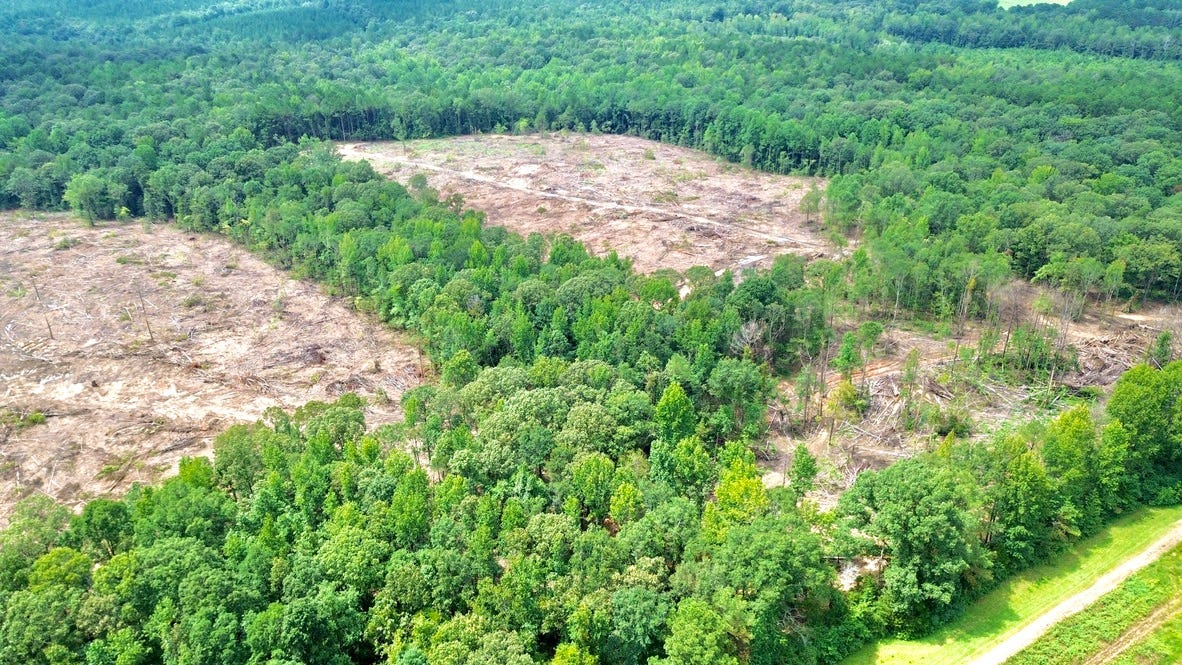
If you have spent any time looking at rural land listings in Alabama, you have probably noticed a distinct pattern. A significant portion of the available acreage features young, pre-merchantable timber. On some tracts, the harvest is fresh enough that you can still see the tire tracks from the last load leaving the woods. It is easy to scroll past those listings without giving them much thought, assuming the seller stripped all the value and now wants a premium price for a clearcut wasteland.
That assumption is understandable, but it leaves many buyers with a question worthy of an answer. Why do so many landowners choose to cut their timber prior to putting their property on the market? That answer is far more nuanced than most people expect. Understanding the forces driving this trend doesn’t only give you understanding, it gives you a distinct advantage. It helps sellers avoid leaving money on the table, and it helps buyers spot real opportunity in an overpriced market.
Why Do Alabama Landowners Sell Real Estate Immediately After a Timber Harvest?
The decision to harvest timber is usually made independently of the decision to sell the land itself. Landowners harvest trees for a wide range of reasons. A salvage cut might be triggered by a sudden storm, a disease outbreak, or an insect infestation. Alternatively, a harvest might be an opportunistic move to capture a short-term spike in stumpage prices. In most cases, the decision to cut is simply the execution of a long-term management plan when a stand reaches peak maturity. The harvest itself rarely indicates an intent to liquidate the real estate. Instead, the subsequent sale of the bare land is almost always a pragmatic response to where a landowner finds themselves in life.
Most Alabama timberland owners only harvest once or twice in their lifetime. Because a full pine rotation runs between 25 and 35 years depending on site quality and management intensity, watching the loggers pull out often brings a distinct moment of clarity. The primary timber revenue has been captured. The next rotation will not mature within the current owner’s lifetime, and the heirs who will inherit the property frequently have no interest in using the land themselves, much less managing a decades-long forestry asset.
At this point, despite all its sentimental and recreational value, the property shifts from an income-producing asset to a burden with real cost comprised of property taxes, management expenses, and insurance. This realization, more than any other single factor, is what brings recently harvested properties to the market. It is not short-term opportunism. It is a rational response to a generational milestone.
Estate planning adds another layer of complexity. Rural land is notoriously difficult to divide equitably among multiple heirs who often have vastly different financial situations, geographic locations, and intentions for the property. Standing timber further complicates this inheritance by introducing ambiguity as heirs who do not understand forest management are unlikely to agree on a realistic assessment of full fair market value without expert guidance. Alternatively, a harvested tract with a straightforward, bare-land valuation is a much simpler asset to liquidate or partition. The upfront timber proceeds fund the immediate obligations of the estate and provide direct cash flow to the heirs, leaving a clean real estate asset behind. While selling immediately after a harvest may not always be the optimal economic decision for the estate over the long term, it is often the most practical solution for complex family dynamics.
Does Harvesting Timber Before Selling Make Financial Sense?
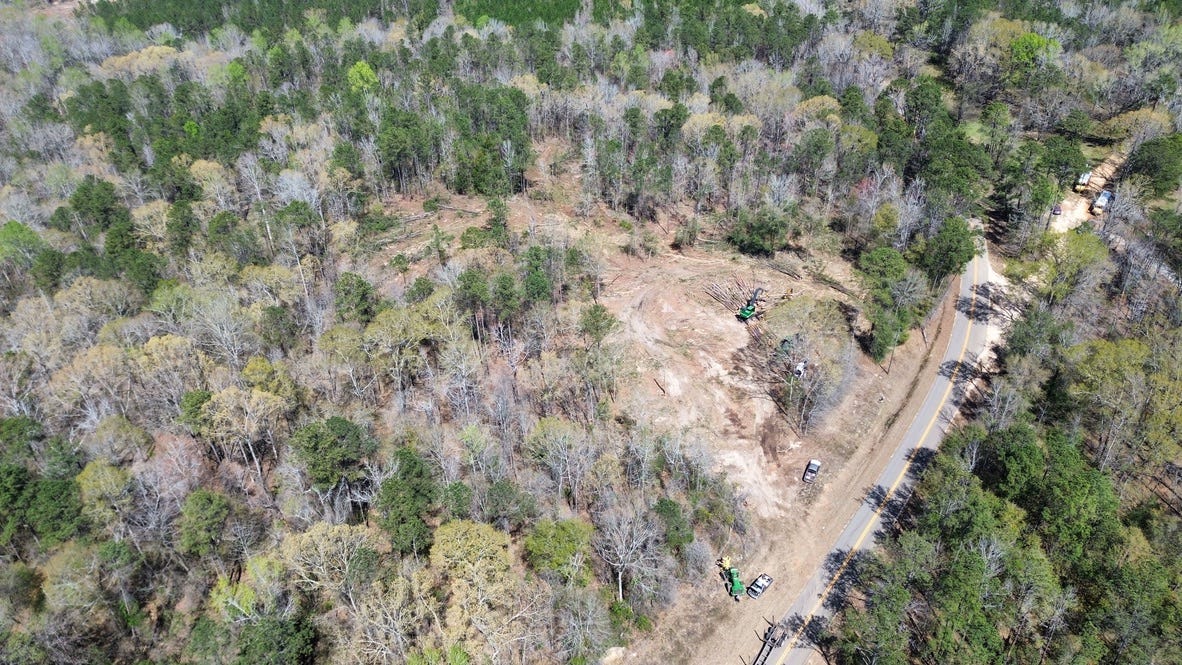
Beyond personal and familial motivations, a compelling financial argument exists for harvesting before selling. Most experienced landowners understand this intuitively, even if they have never seen it on paper.
Historically, standing timber value is consistently discounted when it is bundled and sold attached to land. Because timber markets are highly localized, seasonal, and cyclical, most real estate agents tend to price standing timber on an arbitrary tier system. They assign perceived values ranging from poor to good with no objective inventory data to back up the claim. Sellers frequently accept this discounted bundle because evaluating standing timber requires tools, knowledge, and experience that traditional real estate brokerages simply do not possess. Furthermore, under Alabama law, rendering forestry advice or formal timber value conclusions requires a Registered Forester license. Traditional agents and standard real estate appraisers legally lack the authority to value standing timber inventory. Because sellers are often hesitant to pay out-of-pocket for a professional timber appraisal prior to listing, properties with significant timber volume routinely get priced against inaccurate comparable sales. This pricing failure is problematic for several reasons. On tracts with exceptional timber, it may cause the seller to leave substantial money on the table. With pre-merchantable timber, particularly with advanced natural regeneration being compared to “average” merchantable timber comparable sales, it can dramatically overprice the property. Lastly, and perhaps most significantly, it can artificially set a market ceiling, creating a perception that accurately priced properties with exceptional timber are dramatically overpriced. When a tract is priced far above comparable sales, it lingers on the market, becomes stagnant, and ultimately carries a stigma that deters qualified buyers.
A seller who works with a consulting forester to execute a competitive timber sale before listing captures the full, distinct market value of that wood. Once the logging is complete, they can position the acreage on the market at its true bare-land value. By selling the timber separately from the land, the seller ensures they receive current fair market value for both independent components. A buyer purchasing the same property with the timber standing would typically pay less in total than the sum of those two independent transactions, simply because standard real estate transactions lack the mechanism and the legal licensing to price raw timber accurately.
How a Timber Harvest Creates Infrastructure for the Next Landowner
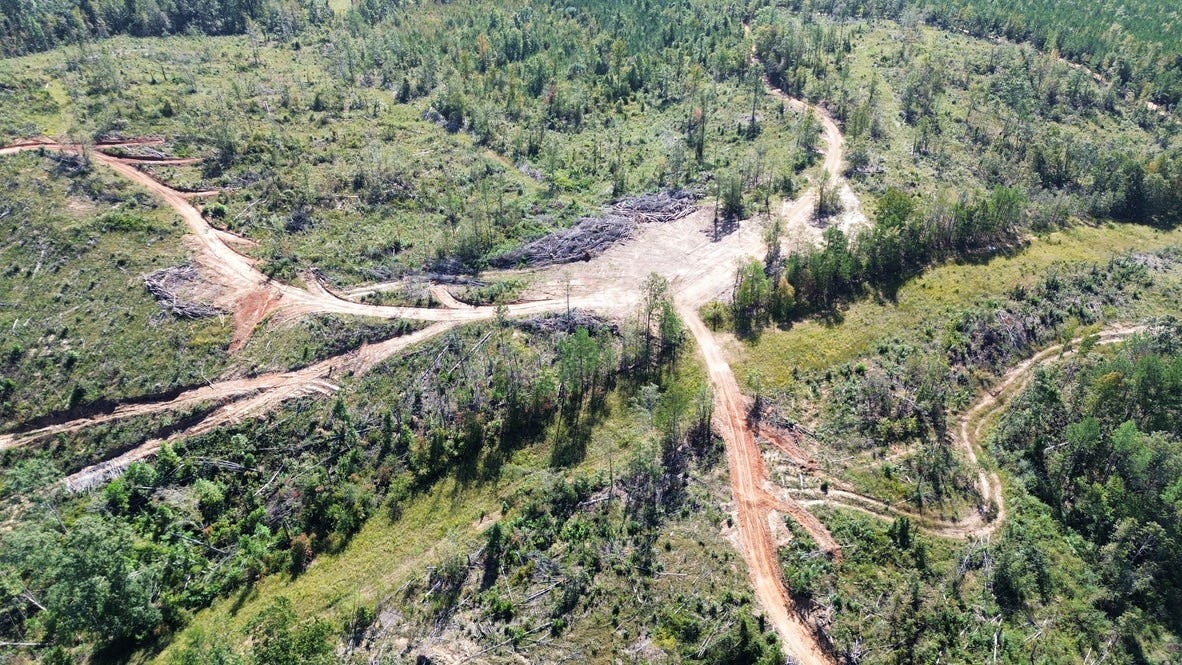
There is an overlooked advantage to a pre-sale harvest that rarely gets discussed. It is highly relevant whether you are the owner planning the cut or the buyer looking at the aftermath.
A timber harvest does more than just generate immediate cash. It simultaneously lays down the basic footprint for future recreational or residential improvements. This footprint is particularly beneficial on tracts that have been largely neglected for long periods. Often, these properties either have no existing trail system or the old roads have been overtaken by volunteer trees and underbrush. A harvest resets that clock. Consider the log deck, which is the central staging area where trees are sorted and loaded onto trucks. Once the logging crew leaves, you are left with an area that is already cleared of heavy stumps. With minimal effort, these areas transition perfectly into wildlife food plots, barn sites, or home clearings.
The primary skid trails also provide an immediate benefit. While they are not finished roads, they function as a roughed-in trail system that traverses the interior of the property. Because logging crews lay out these trails to move heavy loads efficiently out of the woods, the paths typically follow the easiest contours of the terrain. A new owner can immediately use them for ATV or utility vehicle access. Upgrading them into permanent roads for full-sized vehicles requires a fraction of the dozer work it would take to cut a brand-new path through standing timber. Furthermore, if the operation required building or reopening a main haul road for the log trucks, that improvement remains as a ready-to-use road asset.
Depending on the topography, a standard harvest creates roughly one log deck every 40 to 60 acres. On a 200-acre tract, that means a new owner inherits three or four cleared openings already interconnected by a workable trail system, with the heaviest clearing work entirely subsidized by the logging operation. With input from a qualified professional during the planning phase, the location and size of the openings and the connecting trails can be designed to maximize their value for hunting and recreation. What would otherwise require significant capital and heavy equipment time has already been done and paid for by the timber check.
A seller who understands this treats the rough layout as a deliberate selling feature rather than an accidental byproduct. A property that emerges from a well-supervised logging job with haul roads intact, established openings, and the interior trails in place is a fundamentally different asset than it was before the harvest. The practical work that remains, burning debris, grading trails and roads, cleaning up the entrance, is cosmetic. For a buyer evaluating a fresh cutover, that distinction represents a genuine opportunity to acquire improved infrastructure at bare land prices.
What Does a Fresh Clearcut Actually Reveal About a Property?
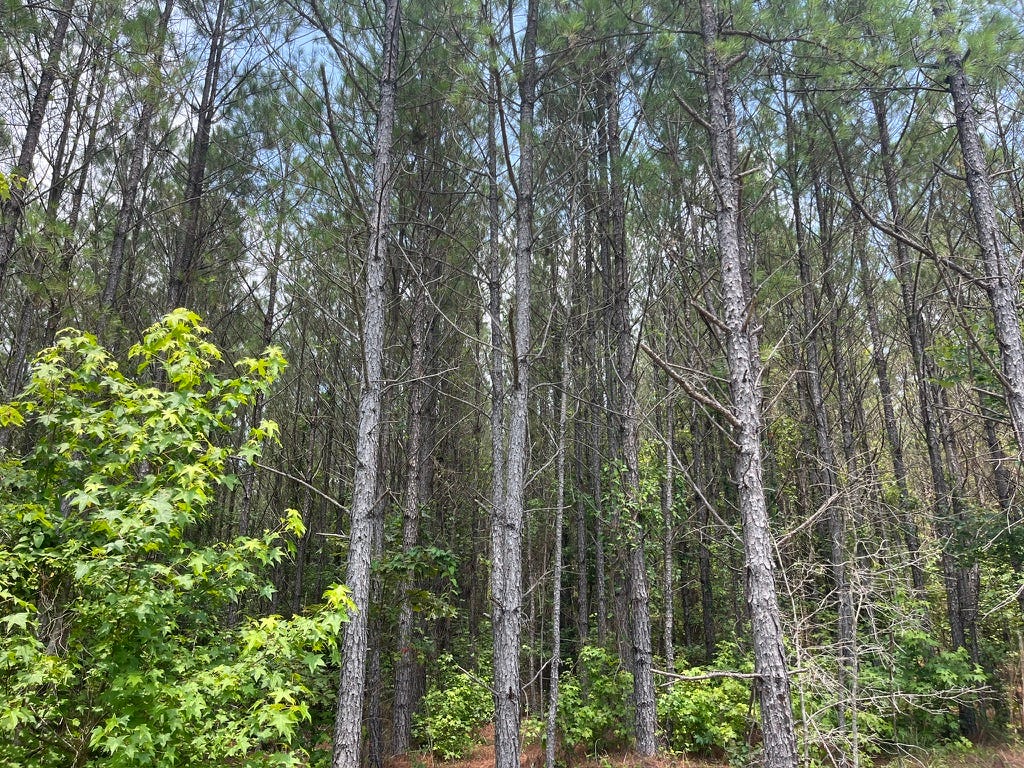
Understanding what a harvest leaves behind changes how a prospective buyer should evaluate a cutover tract. A recently harvested property offers a critical structural advantage that standing timber frequently obscures: absolute visibility.
Walking a property under a thick, closed canopy tells you remarkably little about the actual dirt. Topography, hidden drainages, soil quality variations, rock outcroppings, old dumpsites, and seasonal wetlands are easily masked by thick timber. A final harvest removes this visual ambiguity. The land is exposed and readable in a way that simply is not possible with a dense stand of timber on it.
This visibility advantage is most pronounced on land previously hidden behind densely stocked plantations. At mid-rotation age, an unthinned pine stand is often so dense that it is difficult to see the forest for the trees. Visibility only improves after a commercial thinning or when the stand reaches full maturity with reasonable understory control. This visual barrier explains a well-known anomaly in the rural real estate market. Thinned plantations routinely sell faster and for more money than unthinned stands, even when the unthinned stand holds more total timber volume and a higher raw inventory value. Buyers consistently pay a premium for visual comfort and immediate accessibility. In highly valuable mature or old-growth stands, this dynamic is less relevant because the dominant trees have naturally shaded out the understory, providing good visibility beneath the canopy without a harvest. But for the densely stocked mid-rotation plantation that makes up a large share of Alabama’s rural land market, a clearcut reveals the property in a way nothing else does.
Why Do Fresh Clearcuts Sell for Less and How Long Does the Discount Last?
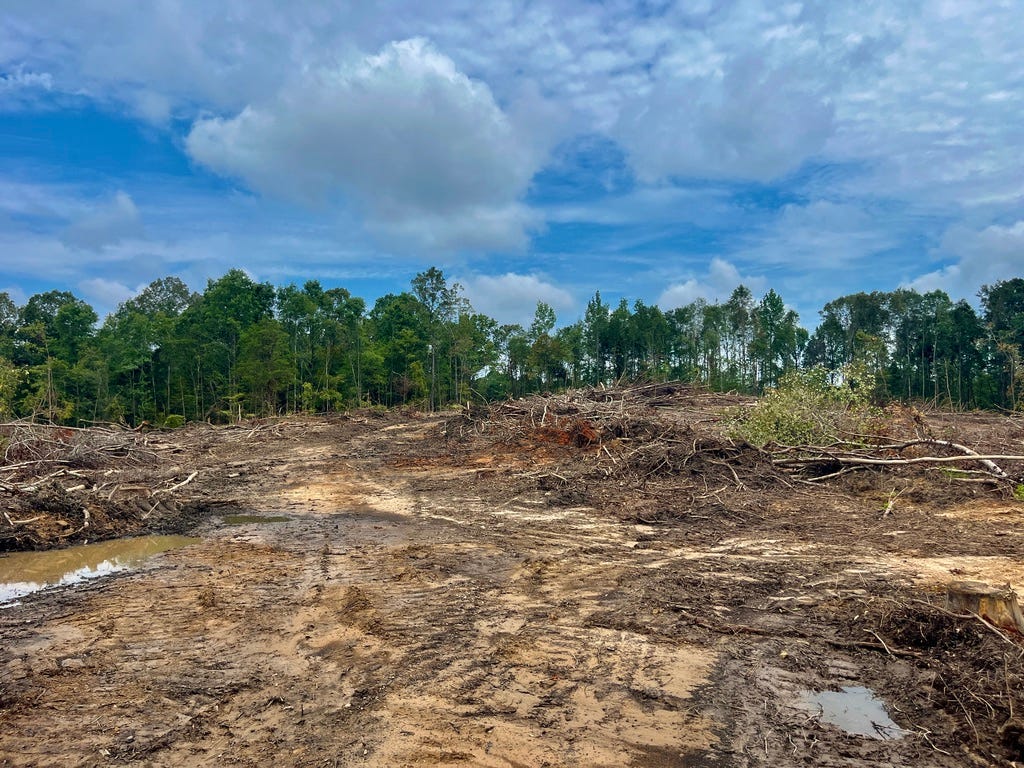
Fresh clearcuts almost always trade at or near bare-land value. Without any improvements or other measurable positive attributes, it’s difficult to defend a premium price on a recently harvested tract because the only thing you are selling is raw land. On a recently harvested tract, slash piles, stumps, malformed residual trees, and equipment scars create negative curb appeal that works against even a fairly priced listing. On particularly rough tracts, the negative perception can even turn buyers away from a competitive bare land value because of the perception of how much work is required to “clean it up.”
What many buyers fail to account for is the compounding effect of time on that visual asset. Burning residual slash piles and allowing the land to rest for a single growing season completely transforms how a property shows. What appears to be an overwhelming cleanup liability on day one is often accomplished with a day or two of burning piles and twelve months of natural regeneration. Native grasses, forbs, and early pine regeneration quickly soften the landscape. By year two, the heavy debris has begun to break down, and the property begins its transition into an active young forest. The underlying land value has not altered, but market perception changes drastically. Recognizing this reality can give savvy buyers an opportunity to purchase rough cutover below market value and quickly build in sweat equity.
The primary exception occurs when the buyer’s intended use requires immediate agricultural conversion. Converting a clearcut into pasture or clean cropland involves intensive mechanical site prep, herbicide, lime, fertilizer, and seed. These are real costs that must be calculated into the due diligence process. For a buyer whose primary objective is long-term timber investment, a private hunting retreat, or a rural estate, the visual discount applied by the market offers an exceptional entry point. A seller who takes the time to burn the logging debris and waits just one season before listing can often command a clean premium, presenting a completely different aesthetic product without altering the underlying acreage.
What This Means for Rural Land Buyers in Alabama
The frequency of recently harvested properties on the Alabama market is neither random nor a sign of a degraded asset class. It is the predictable intersection of mature timber cycles, generational land transfers, and a market that reacts emotionally to the visual impact of logging. Sellers who understand how buyers perceive recently harvested land can use that knowledge to inform both the decision to harvest and how the operation is planned and executed, turning what most people treat as an exit strategy into a deliberate value-creation process.
A buyer who understands these same mechanics operates with a significant informational advantage. A recently harvested property with an established road network, pre-cleared openings, and an exposed layout is not a ruined piece of land. It is a clean slate at the exact beginning of its next ecological and financial chapter.
Learning how to read the ground beneath a clearcut, calculating the monetary value of the existing infrastructure, and projecting what the next timber rotation will become over a realistic holding period is the most profitable skill an Alabama land buyer can develop. It is also an opportunity that the vast majority of the market will continue to scroll past.
If you are evaluating a recently harvested property in Alabama and want an objective, ground-level assessment of the soil, topography, and infrastructure layout, feel free to reach out to schedule a consultation.