
Beyond the Flip
A Registered Forester's Guide to Timberland Investment in Alabama

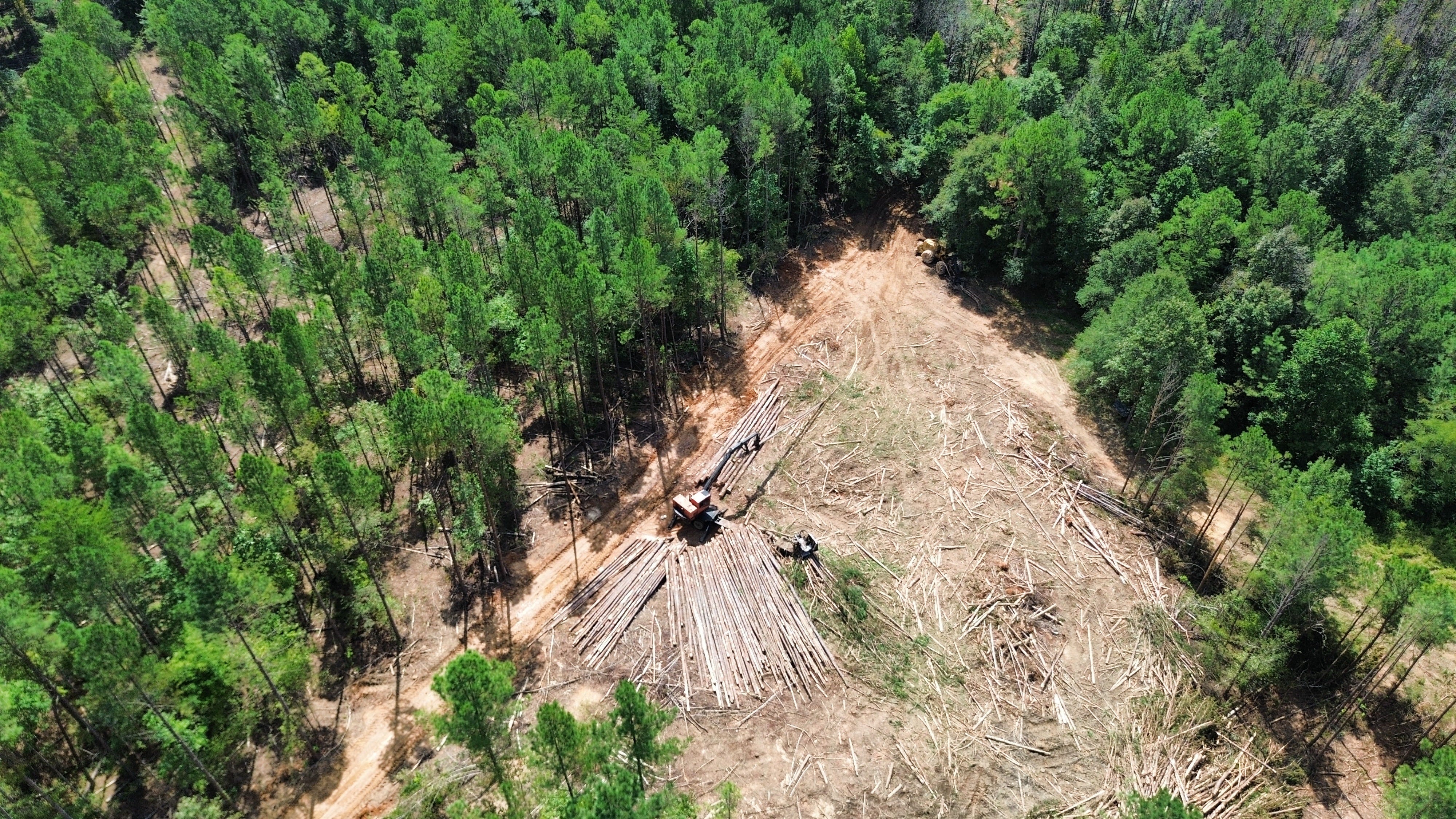
Land flipping gets a lot of attention, and for good reason. Find an undervalued property, buy it at a steep discount, resell it at or near market value, and pocket the difference. It’s simple and it works. But as the strategy has grown in popularity, so has the competition. Most landowners have received multiple unsolicited offers in the mail from investors promising a quick cash closing with no fees. Truly discounted deals are harder to find than they used to be, especially for investors without a direct mail operation or a deep list of off-market contacts.
That doesn’t mean there isn’t money to be made. It means the edge has shifted. Investors who consistently outperform aren’t always the ones who find the best deal. They’re the ones who know how to identify the diamond in the rough that sits in plain sight. If you want to invest in land, particularly timberland, here are six practical steps to increase your return and make sure each investment performs the way you expect it to.
Step 1: Know Your Market
Every investment carries risk. The best way to mitigate that risk is to understand the market you’re investing in, not just price trends, but the underlying drivers of value. What is the highest and best use for this type of property in this area? Who are the buyers, and what are they paying for?
For timberland specifically, that means understanding local timber markets: the product classes being harvested, mill specifications, current demand, and how far timber can feasibly be hauled. In Alabama, these dynamics vary significantly across the state; what’s true in the Tennessee Valley may look very different from what you’ll find in the southwest or the Wiregrass region. These details don’t show up in a listing price, but they have a direct impact on what a property is worth and what you can do with it.
It’s also worth noting that timber market conditions affect far more landowners than just those actively harvesting. As a Registered Forester working across Alabama, I’ve seen firsthand how local market conditions affect land values. Even in areas where the primary driver of value is recreation, a soft or non-existent timber market eliminates a valuable tool for managing wildlife habitat cost effectively at scale. The absence of this tool can eventually impact wildlife habitat quality at a regional level. The timber market impacts all of us in ways most people never consider.
Regardless of your experience level, a land professional with deep knowledge of your target area is one of the most valuable resources you can have. Their market knowledge alone can save you from costly mistakes and help you identify opportunities that aren’t obvious from the outside.
Step 2: Have a Plan
Knowing the market means knowing what buyers are looking for and why. With that foundation, you can evaluate each property and develop a clear plan to maximize its value before you ever make an offer. Depending on the property, that plan might center on a timber harvest, recreational improvements, subdivision, or a long-term hold for personal use. Sometimes it’s a combination. The key is having a primary strategy that factors in acquisition and improvement costs with expected sale value and profit margin.
If due diligence reveals the original plan isn’t feasible, you can pivot to an alternative or renegotiate the price before walking away. Holding periods vary widely depending on the strategy. A timber harvest requires time to procure a buyer, negotiate a contract, and complete the operation. In Alabama’s current timber market, that process routinely takes a year or longer and can be affected by weather, property conditions and access, as well as demand. That timeline is incompatible with a quick flip, so it has to be factored into the plan from the beginning. Once the strategy is confirmed, you can move forward with confidence.
Step 3: Be Selective and Decisive
Discipline is the one trait shared by every successful investor. They evaluate far more properties than they buy, and they’re willing to walk away when the numbers don’t work. Emotion has no place in that process. That said, if a property checks every box except price, there’s nothing to lose by making an offer that works for you. Put it in writing with real terms. A formal offer is much harder to ignore than a casual suggestion.
If the numbers look good at surface level, move quickly. Speed is often the determining factor in who gets the obvious deals when they come to market. Get on the property as soon as possible, and if nothing is obviously wrong, make your move. You don’t need to know every detail before putting in an offer. That’s what the inspection period is for.
Step 4: Do Your Due Diligence
The inspection period is one of the most valuable tools available to a buyer. It creates a defined window to verify the condition and characteristics of a property before fully committing to purchase it. Used effectively, it protects you from the unknown and gives you the information needed to close with confidence or renegotiate if something doesn’t line up.
Depending on the property and intended use, due diligence might include visual inspections, a boundary survey, a timber cruise, a perc test, utility confirmation, access confirmation, a review of restrictive covenants, zoning verification, and financing arrangements. It’s also a good time to sharpen your market research and pressure-test assumptions about the resale strategy.
The inspection period should be as short as practical while still allowing time to complete what matters. If a seller isn’t willing to grant enough time for a time-intensive item like a survey, that item may need its own specific contingency.
Once inspections are complete and the property checks out, you can waive the remainder of the period and proceed to closing. If due diligence isn’t finished in time, or if something comes back unfavorably, you have the option to request an extension, renegotiate the price, or terminate the contract and recover your earnest money.
Step 5: Buy Ahead of Transition
Transition happens when a property shifts from one use to a higher and better one. Urban and suburban growth, new highway construction, commercial development, and zoning changes are obvious causes for transition. But there’s another type of transition that most investors overlook entirely.
Most people think of timber growth as slow and steady. Biologically, that’s roughly true. But value doesn’t grow that way, it grows in steps. As trees mature into higher product classes (from pulpwood into chip-n-saw, or from chip-n-saw into sawtimber etc.) the per-unit value can double or triple within a relatively short window, all while volume is still increasing. That’s the stair step in action, a jump in total value that catches most buyers off guard. An investor with a long-term hold strategy may capture multiple of these jumps depending on the timber stage at purchase, management and duration of ownership.
Active management accelerates the timeline. Thinning and prescribed burning improve stand quality and promote vigorous growth, while generating cash flow along the way. That’s not passive appreciation; that’s an active investment strategy. It’s worth noting, though, that getting a pine stand thinned isn’t always as straightforward as it sounds. It’s important to lean on your trusted professionals to set realistic expectations.
Step 6: Input Increases Output
Not every improvement project has the same impact, but the returns on strategic property improvements frequently outpace the cost. End buyers are often willing to pay a premium for a property that’s ready to use rather than a competitively priced one that feels like a long-term project. Strategic improvements create what some investors call “forced appreciation.” By developing the property in a way that accelerates a higher and better use transition, value follows along with it.
Road construction and improvement, clearing food plots or home sites, mulching, herbicide treatments, prescribed burning, site prep and reforestation, zoning changes, and subdivision approval are all examples of improvements worth considering. Some have relatively low cost. Others can generate revenue while they’re being implemented. One of the more counterintuitive examples: buyers will often pay as much or more for a thinned timber stand than an unthinned one, even though the unthinned stand contains more total timber value. Visibility, aesthetics, and usability carry real value. A property that looks managed and accessible appeals to a wider pool of buyers.
Many wildlife and timber improvement projects also qualify for cost-share programs that can reduce or fully offset the expense for long-term investors. Whatever improvements you undertake, keep detailed records of what was done, who did the work, and how the property benefited. Use trail cameras and harvest pictures and recorded data to show how the wildlife has responded to your efforts. Buyers appreciate that documentation when it comes time to justify a premium price.
Remember to keep your tax professional in the loop throughout the process. They can help you distinguish between deductible expenses and capital improvements that increase your cost basis, and they’ll know the best way to handle any income generated along the way.
The Bottom Line
Land flipping may have become more competitive, but the fundamentals of successful land investing haven’t changed. The best returns don’t only come from finding discounted properties, they come from understanding where value exists and knowing how to create more of it.
Timberland offers a distinct advantage in that regard. In addition to market-driven appreciation, it produces biological growth that adds value over time. Thoughtful improvements layer on top of that by transitioning raw timberland into well-managed recreational property or a rural homestead. Investors who pair that approach with experienced land professionals, foresters, wildlife biologists, and contractors will consistently outperform those who rely solely on buying low and selling quickly. The combination of market knowledge, clear strategy, disciplined acquisitions, and active management is what separates them.
In today’s market, the edge doesn’t come from finding the obvious deal. It comes from seeing the opportunity others miss and having the knowledge to act on it.
If you’re evaluating timberland in Alabama, whether you’re a first-time land investor or adding to an existing portfolio, feel free to reach out. A conversation costs nothing, and local knowledge makes a real difference.